I design B2B SaaS platforms and management systems, where understanding the business is just as important as understanding the people who use them. I turn complex workflows into clear, functional and scalable digital products.
From manual processes to
centralised, automated grant management
Client
SEPAR
Role
Sole Product Designer
Team
Account lead and development team.
Period
Jun–Sep 2024. In use since 2024/2025.
Scope
4 user roles, full funding round cycle.
Overview
SEPAR, the Spanish Society of Pulmonology and Thoracic Surgery, was an Index client. As the sole Product Designer on the project, I was responsible for digitising its research grant process, from applications through assessment, funding decisions and follow-up.
The scientific society runs three grant programmes, each with different requirements, documentation and assessment criteria. Funding rounds last several months and require coordination between applicants, the secretariat, reviewers and the scientific committee.
Much of that coordination relied on manual work. The secretariat checked documents, prepared Excel lists and sent assessments by email while keeping information up to date across several files.
I joined the initial client meetings to understand their needs and define the scope. I then took responsibility for the UX/UI design, development specifications and follow-up of the no-code implementation.
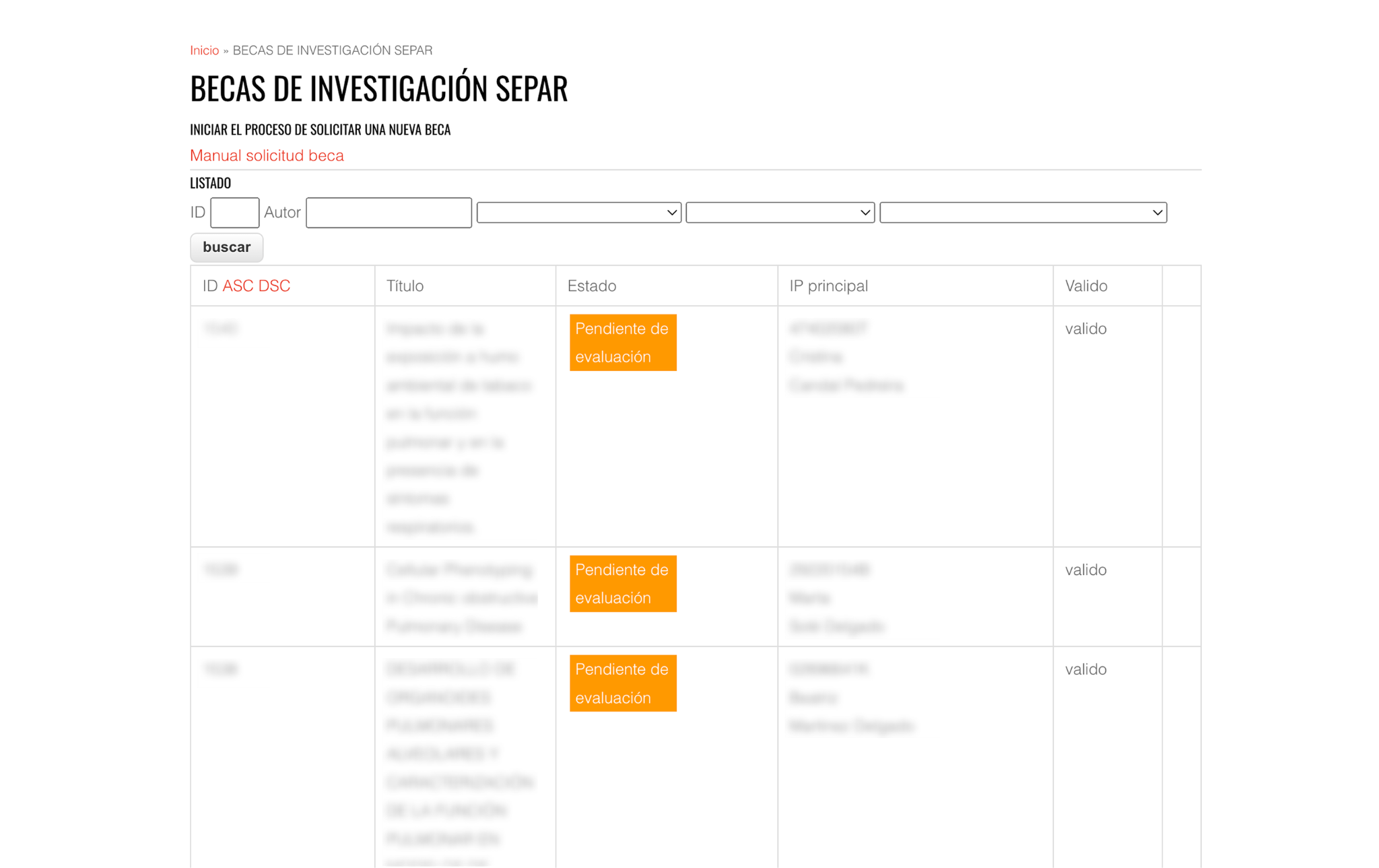
The previous funding roundThe application list on the old platform
The problem
Information was spread across emails and files, making it difficult to track each application and increasing the coordination workload.
Eligibility was also checked after applications had been submitted. Applicants could prepare all their documents only to discover later that they did not meet the criteria, while the secretariat had to review applications that could have been ruled out earlier.
Reviewers also struggled to understand how scores were calculated and how their corrections would affect them. We needed to centralise the process, remove repetitive steps and make the assessment clearer while retaining the society’s established rules.
Approach
I held remote interviews with the teams involved and worked through the previous platform to understand their tasks, responsibilities and exceptions. I used this analysis to define the workflows and prioritise the points where manual intervention created the most work.
The main opportunities were to check eligibility earlier, make the assessment understandable and bring communications and application tracking into one place.
The deadline and the no-code implementation constrained the product and design decisions. Instead of building a visual system from scratch, I focused on information architecture, consistent journeys and the features needed to run a complete funding round.
One flow, three funding programmes
Design decisions
Checking eligibility before completing an application
I moved eligibility and incompatibility checks to the start of the form so applicants could find out whether they met the conditions before preparing all their documents.
I designed a summary showing which conditions had not been met and explaining why the application could not continue. This avoids unnecessary work for applicants and reduces the secretariat’s subsequent review of ineligible applications.
Eligibility checks at the start of the application
Making the assessment clear while preserving its rules
The society already had a scoring model it needed to retain. My responsibility was to make it clear how to use and interpret it.
For research grants, applicants complete a self-assessment that reviewers can subsequently amend. I designed the presentation of scores so the original assessment and each reviewer’s scores are stored separately, making it possible to compare them.
A coordinator steps in when reviewers disagree. The secretariat can then access the scores and see how the assessment was resolved, keeping a traceable record of the process.
Bringing coordination together and automating communications
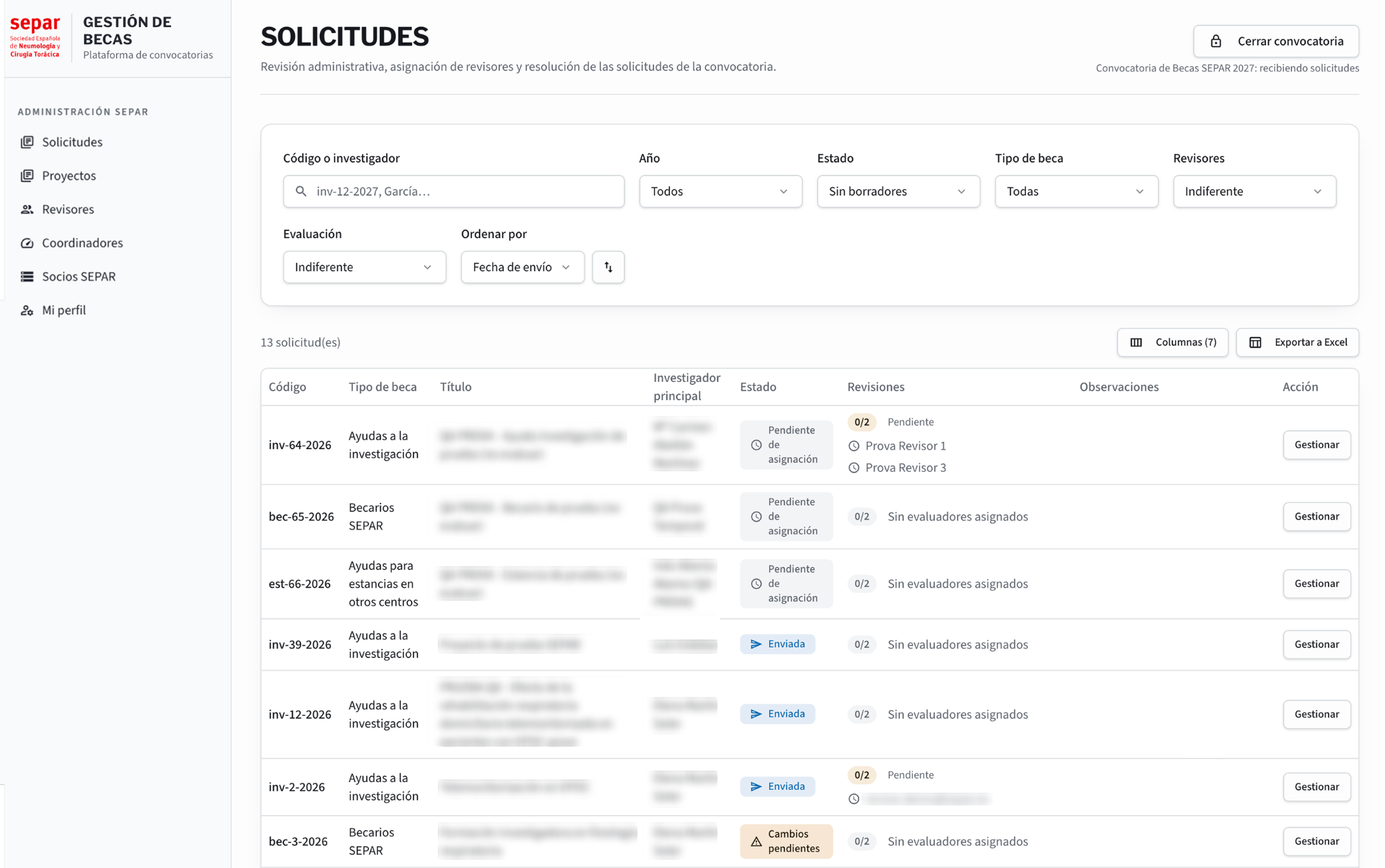
I designed a shared workflow where participants can track their applications or assessments and the secretariat has an overview of the funding round. We also added Excel list exports directly from the platform to reduce administrative work and automated communications with applicants and reviewers, with emails sent whenever the process status changes.
BeforeAfter
Step 1: Grant application administration view
We also introduced reminders to help follow up outstanding assessments. This reduced the need to update files and send emails manually, keeping information and communications tied to the progress of each application.
The solution
The platform brings the three grant programmes into one system, with journeys adapted to their requirements and permissions. Before launch, the secretariat, reviewers and coordinators tested the features. We refined the assessment process in particular to accommodate changes to the funding round’s rules.
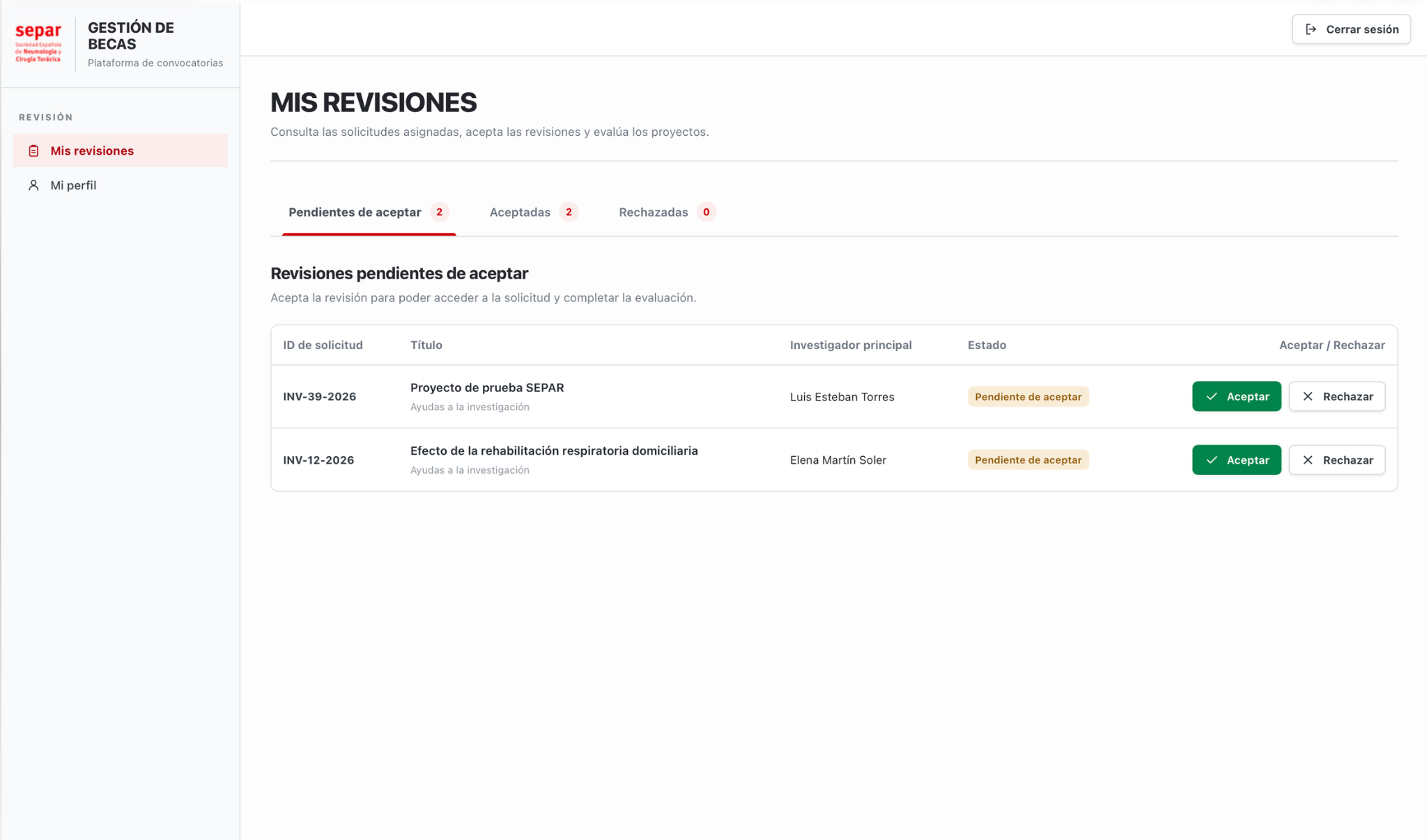
In November 2026, I returned to the project to develop its design in Lovable. I started from the existing workflows and rules and used AI to speed up the construction of the new interface. The output needed close supervision because the tool occasionally changed fields, steps and behaviours that had to comply with the rules. It also failed to check for broken buttons or links and whether the workflow followed a clear logic.
Over one week, I iterated the screens and validated the application intake workflow and internal administration, with support from the development team to connect the data. The team subsequently continued with the remaining features and implementation.
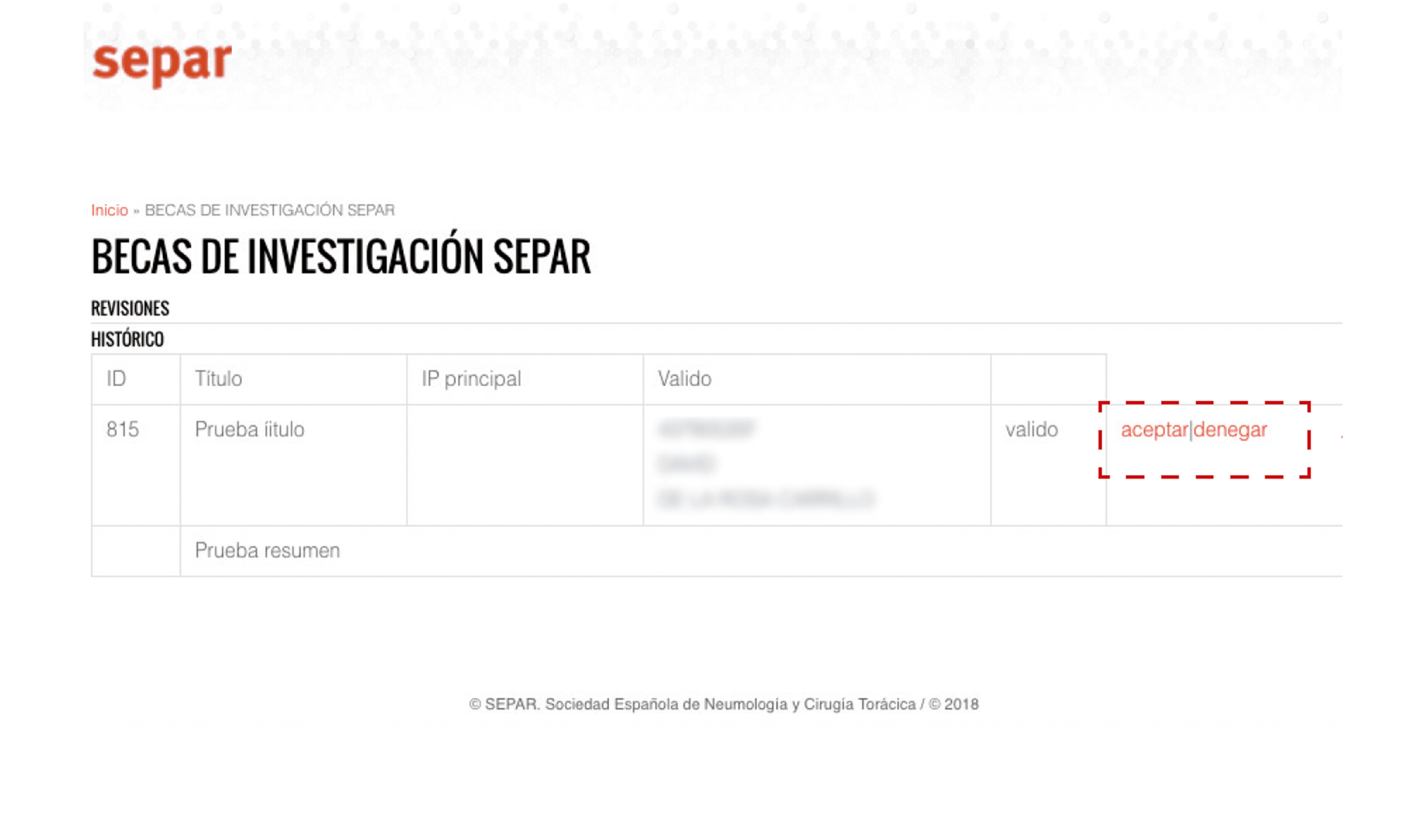
BeforeAfter
Step 1: Pending reviews
Results and lessons learnt
The platform has been in use since the 2024/2025 funding round. In 2026, it handled more than 105 applications, of which 63 received funding.
Automated emails triggered by status changes, Excel list generation and assessment tracking reduced manual work for the secretariat. These features replaced tasks that had previously required administrative intervention, although the time saved was not measured.
The AI-assisted work in 2026 also reinforced the importance of design judgement during implementation. Although AI helped move a new version forward quickly, each journey needed to be reviewed to ensure the forms, rules and communications respected how the funding round operated.